
How to Become a Registered Dietitian: The Post-2024 Path
By Editorial Team ·
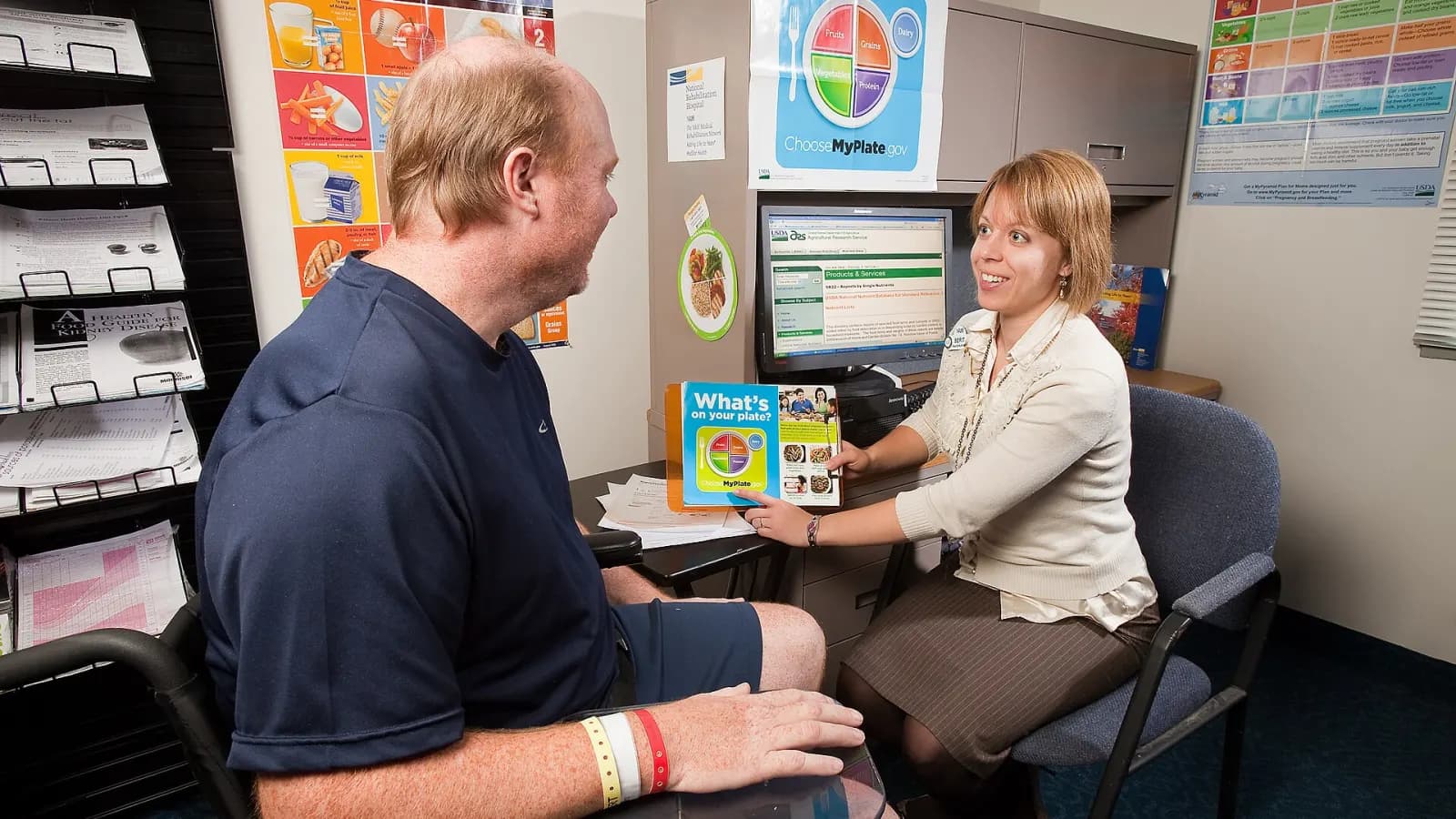
To become a registered dietitian today, you need a graduate degree, ACEND-accredited dietetics coursework and supervised practice, and a passing score on the Commission on Dietetic Registration's (CDR) exam. The graduate degree has been required since January 1, 2024, and it can be in any subject. State licensure is a separate step on top.
The steps:
- Earn a graduate degree from a USDE-accredited school (or the foreign equivalent), in any major.
- Complete ACEND-accredited dietetics coursework (a Didactic Program in Dietetics, or a program that builds it in).
- Complete ACEND-accredited supervised practice (a dietetic internship, or a program that builds it in).
- Pass CDR's registration exam for dietitians.
- Get licensed in your state if it requires it, and keep your credential current with continuing education.
Steps 1 to 3 can overlap, and several program types combine them. Once you're eligible, our free RD practice quizzes are a quick way to see where you stand on the exam's four domains.
The graduate degree rule, in plain terms
Since January 1, 2024, anyone becoming eligible for the registration exam for the first time needs a graduate degree instead of a bachelor's (CDR). CDR's FAQ on the change answers the questions most people have:
- Any major counts. The graduate degree doesn't have to be in nutrition, as long as a USDE-accredited institution (or a foreign equivalent) grants it.
- Timing is flexible. You can finish the graduate degree at any point before you apply for exam eligibility. It doesn't have to come after your supervised practice.
- The rest didn't change. You still need the ACEND coursework and supervised practice. Only the degree level moved up.
- Who doesn't need it: anyone who established exam eligibility on or before December 31, 2023 (even if they haven't passed yet), current RDs, and former RDs registered before 2024 who want to reinstate.
The rule applies only to the dietitian credential. CDR did not change the degree requirement for the dietetic technician credential (NDTR).
The four routes CDR accepts
CDR lists four US routes to exam eligibility. All of them run through programs accredited by ACEND, the Accreditation Council for Education in Nutrition and Dietetics.
| Route | Degree | Coursework | Supervised practice |
|---|---|---|---|
| DPD + dietetic internship | Graduate degree | Didactic Program in Dietetics (DPD) | Separate dietetic internship (DI) |
| Coordinated Program (CP) | Graduate degree | Built in | Built in |
| Graduate Program (GP) | Graduate degree | Built in | Built in |
| Doctorate ISPP | Doctorate | Built in | Individualized Supervised Practice Pathway |
The DPD + internship route is two separate steps: you finish your coursework, then apply for an internship. The coordinated and graduate programs put coursework and supervised practice in one program, so there's no separate internship application.
You can search every accredited program in ACEND's program directory.


If your degree is from outside the US, CDR's route starts with a course-by-course evaluation of your degree by an approved agency, after which you contact ACEND program directors about completing the missing pieces. International Coordinated Programs include at least 1,000 hours of supervised practice. CDR also has reciprocity agreements for dietitians credentialed in Canada, the Netherlands, the Philippines and Ireland (CDR).
From program to exam day
When you finish, you don't apply to CDR from scratch. Your program director does the first step (CDR):
- Your program director confirms you've met the academic and supervised practice requirements and sends CDR your final transcript and verification statement.
- You get an email to complete a short online application and agree to CDR's Code of Ethics.
- Once you're approved, CDR confirms your eligibility, and Pearson VUE emails your Authorization to Test within 48 hours. Processing normally takes about a week.
- The authorization expires one year after it's issued, so plan your exam date inside that year.
The exam itself, from the RD Candidate Handbook: 125 to 145 questions in 3 hours, a $250 fee, and a scaled passing score of 25 on a 1 to 50 scale. For first-attempt pass rates and what happens if you need a retake, see our post on the RD exam pass rate.
After you pass: licensure and keeping the credential
Licensure is a separate, state-level step. CDR calls dietitian licensure "a state-based activity" and refers questions to each state's licensure board (FAQ, question 5). Check your state's board before you start work.
Keeping the credential takes 75 continuing professional education units (CPEUs) every 5 years, including at least 1 in ethics or health equity (CDR).
Frequently asked questions
Do you need a master's to be a registered dietitian?
Yes, if you become exam-eligible on or after January 1, 2024: CDR requires a graduate degree. People who established eligibility by December 31, 2023, and current RDs, don't need one.
Does the master's have to be in nutrition?
No. CDR accepts a graduate degree in any major from a USDE-accredited institution or its foreign equivalent. You still need the ACEND-accredited coursework and supervised practice.
I finished my DPD before 2024. Do I need a master's?
Probably, unless you had also finished your supervised practice in 2023. CDR's FAQ says candidates qualifying with a bachelor's degree had to be submitted to CDR by their supervised practice program director by December 31, 2023. If that didn't happen, the graduate degree rule applies. When in doubt, ask CDR.
What's the difference between an RD and an RDN?
None in practice. CDR describes RD and RDN as two designation options for one certification, and you can use either.
Can I become a dietitian with a degree in another field?
Yes. A bachelor's or graduate degree in another field doesn't rule you out. You need a graduate degree (any major) plus ACEND coursework and supervised practice, through one of the four routes above.
When you're ready to start preparing for the exam, try our free RD practice quizzes.
Official source: eligibility, fees, and the current content outline are set by Commission on Dietetic Registration (CDR). Confirm the details there before you register.